
Multi-Location Businesses: What to Centralize and What to Manage Locally
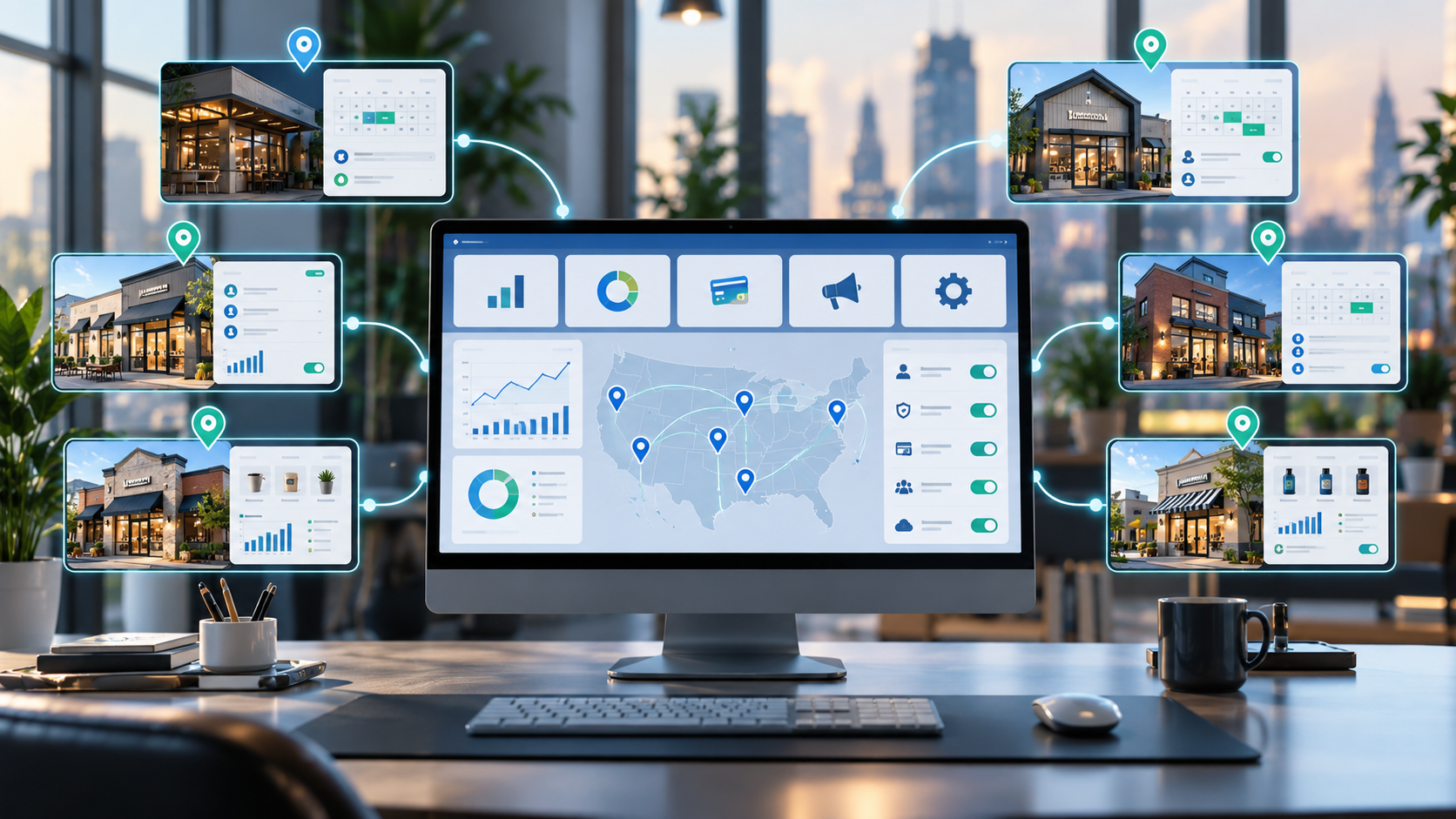
Running a single salon or barbershop takes a lot of talent, energy, and multitasking. Now imagine expanding to a second, third, or tenth location.
Now you have multiple appointment books to manage and front desks to staff. You’re also building up your brand. Consistency and control matter more than ever, since each location can shape what customers think of your brand, even though you can only be in one place at a time. You want to grow your business without losing the community and unique feel that made your first location so special.
So, how do you maintain your brand’s high standards without micromanaging every local team? The key is finding the right balance between centralized control and localized autonomy.
To help you find that middle ground, we’ve put together this guide to multi-location business management. We’ll help you identify what to lock down and what to keep flexible at each location. We’ll also cover modern multi-location operations software and how it can support your growth without complicating daily workflows. Let’s get started.
Consistency vs. Flexibility in Multi-Location Operations
The first thing to know is that scaling any business is tricky, and beyond all the logistics of acquiring or renting a new facility and staffing it, the most delicate issue is how to maintain operational control.
If you centralize management too much, you risk creating a rigid and bureaucratic atmosphere. Such an environment can be especially stifling in the salon business. Strict rules can make your business feel impersonal or burden busy front desks. Local managers might feel handcuffed by the rules, unable to accommodate neighborhood walk-ins or meet the unique expectations of local clients.
On the other hand, leaving everything up to the local managers can create an inconsistent customer experience. When each branch makes its own rules, your brand identity becomes diluted. Clients receive inconsistent service across locations, and you lose some control over day-to-day business decisions.
What to Centralize Across Salon Locations
Fortunately, finding the right balance between centralized and local control doesn’t have to be challenging. There are some business functions that should definitely be centralized. These include:
Client Data and Booking Standards
No matter which location they choose, clients expect a unified experience. Whether they visit your flagship downtown salon or your newest suburban location, they don't view your branches as separate businesses. To prove that you are operating under one brand, create a seamless booking experience by centralizing the following:
- Shared client records: A unified database ensures a client's visit history, color formulas, and personal preferences are consistent across locations.
- Service naming conventions: Standardizing your service menus prevents confusion during the check-in and visit flow. A "Classic Fade" or "Balayage Retouch" should mean the same thing, take the same baseline amount of time, and be booked the same way across the board.
- Booking policies: Cancellation policies, no-show fees, and deposit requirements should be consistent, no matter where clients drop in.
Reporting and Performance Measurement
You can’t accurately guide a business with fragmented or inconsistent data. That’s why reporting should be as centralized as possible. This means establishing:
- Standardized KPIs: Every location should measure success the same way, using the same metrics: staff utilization, retail attachment rates, client retention, etc.
- Consolidated reporting: You shouldn’t have to manually combine spreadsheets from different branches at the end of the month. Centralized reporting gives you instant, business-wide visibility and keeps owners in control.
- Financial oversight: Centralized payroll and commission tracking ensure that your staff is paid accurately and consistently, reducing administrative stress.
Permissions, Policies and Administration
The software you use should enforce a consistent experience across all your locations, and properly configured system permissions provide the necessary guardrails to make this happen. You should enforce consistent:
- Access controls: Centralized user permissions and access controls ensure that only authorized personnel can alter service menus, change prices, or access sensitive financial reports.
- Data policies: Centralized management of client data protects privacy and ensures compliance with marketing regulations.
- Operational guardrails: Configure your software to prevent accidental deletions or unauthorized discounts.
What to Manage at the Location Level
While it’s important to set baseline standards, local managers need the flexibility (and the tools) to adapt to the day-to-day realities of their shops. Here’s what to manage at the location level.
Staffing, Hours, and Availability
Shop managers understand the rhythm of their shops better than anyone else. Make that knowledge a competitive advantage by letting the local team handle the following:
- Schedule adjustments: Managers on the ground are best positioned to adjust daily schedules, handle sudden staff call-outs, and manage walk-ins efficiently.
- Operating hours: A branch in a busy downtown commercial district might need to open earlier to catch the pre-work crowd, while a suburban location might stay open later for evening appointments.
- Shift coverage: Managing breaks, lunches, and floor coverage requires real-time, real-world context that only location-level management can handle effectively.
Services, Pricing, and Promotions
Each shop can cater to its unique clientele with:
- Market-specific pricing: Some locations may command different pricing tiers based on the local real estate market, competitor density, or staff experience level.
- Targeted promotions: If one branch is slow on a Tuesday, the local manager may run a flash promotion to fill empty chairs, for example.
- Local services: Certain locations might have unique amenities or space for services that other branches lack. Maintaining centrally defined guidelines alongside approval processes allows for this local flavor without breaking brand consistency.
Where Central and Local Management Align
Once you have an operational plan that divides centralized control and local management, you’ll find many things naturally align. You just need multi-location salon software to help connect your various locations. Here’s what a modern salon management system should offer.
Cross-Location Booking
If a client’s favorite stylist is fully booked at one location, they should be able to check the availability at your other branches. Look for software that offers:
- Shared client access: This requires a centralized, unified client database that all locations can securely access.
- Location-specific availability: At the same time, a booking system must recognize each branch's local capacity rules, operating hours, and resource availability.
- Consistent rules: Booking rules must remain consistent to avoid overbooking or overpromising and ensure a smooth client experience, no matter which shop they visit.
Employees Across Multiple Locations
It’s common to have staff who float between different branches. While this can present scheduling challenges with pen-and-paper appointment books or outdated software, modern apps should offer:
- Conflict-free scheduling: Centralized visibility is key to preventing overlapping shifts or impossible commute times.
- Localized permissions: An employee might be a senior stylist with management permissions at their home location, but only require standard stylist access when filling in at a secondary branch.
- Unified performance tracking: Consolidating performance reporting for multi-location staff ensures they receive accurate credit for their work, regardless of where they performed services.
The Risks of Disconnected Systems
Operating multiple locations using disconnected software systems or inconsistent manual processes introduces significant risks to your business.
The biggest risks include:
- Front-desk friction: Using different tools at each location forces staff to learn multiple systems, increasing training time and the likelihood of booking mistakes.
- Frustrating client experiences: Clients quickly lose patience when their profile, past color formulas, or gift cards do not transfer seamlessly between branches.
- Blind spots for owners: Fragmented systems create data silos. When information does not flow freely to a central dashboard, owners are forced to make decisions based on outdated or incomplete information.
- Operational chaos: Day-to-day operations become disorganized without a centralized view of all branches.
Deciding What Belongs at Each Level
Ultimately, deciding what you should manage centrally or locally doesn’t have to be a challenge. If you’re not sure about what belongs where, just refer to this framework:
- Centralize a process if it directly impacts your brand identity, financial reporting, or the standard client experience. Inconsistency across branches creates major risk, so if it affects the baseline level of service, it belongs at headquarters.
- Localize a process if it involves the daily client flow, staff utilization, or reacting to hyper-local market demands. If restricting it makes the local manager's job harder, give them the flexibility.
Centralized vs. Local Management: A Quick Reference Guide
To help you evaluate which workflows belong where, use this breakdown of where key operational responsibilities deliver the most value:
Multi-Location Software Delivers the Control Salon Owners Need
You do not have to choose between strict enterprise control and empowering your local teams. Multi-location operations software helps you find the right balance.
Modern salon management platforms like BookedBy are built to handle the complexities of multi-location management. BookedBy centralizes your data, reporting, permissions, and brand standards in one secure place.
At the same time, BookedBy provides local managers with intuitive tools to manage staff availability and meet the expectations of both long-time customers and new walk-ins. BookedBy helps both you and your local operators run your shops based on unified standards, eliminating the friction of disconnected apps.
If you are ready to save time at the front desk and give your multi-location business the practical software partner it deserves, explore our full list of features today. Or, to see firsthand how we can help you bring clarity and control back to your operations, request a demo and discover what BookedBy can do for your business.
FAQs About Multi-Location Business Management
For quick answers to common concerns, check out these FAQs about multi-location business management:
How do multi-location salons maintain brand consistency without micromanaging?
Maintaining consistency across locations means standardizing the customer experience while giving local managers autonomy over specific daily tasks. Your client database, cancellation policies, and brand standards should absolutely be centralized. Meanwhile, on-site salon managers should be empowered to handle daily scheduling and staffing adjustments, based on real-time client demand.
Can front-desk staff view bookings across multiple locations?
Yes, modern multi-location operations software provides front-desk teams with secure, cross-location visibility.
How do you schedule employees who work across multiple branches?
Managing floating employees is one reason you need a centralized scheduling engine. Otherwise, you risk double-booking and other conflicts. Multi-location operations software should treat each employee as a single profile across the organization while recognizing location-specific hours and chair assignments.